

A while back, Chris and I looked at a service business listed for sale by owner.
We asked how the owner arrived at the asking price. We asked more than once. The answer was always some version of “it’s what I need to live on while I launch my next thing.”
I get it. That’s a real number and a real worry. But it isn’t how a buyer, or a lender, prices a small business.
When we submitted our offer, we also had to explain how businesses like hers are typically valued. She wasn’t thrilled, and honestly, I don’t blame her. Finding out how your life’s work is valued from the person trying to buy it, in the middle of a negotiation, is a rough way to learn.
Nobody on her side had told her earlier. No advisor, no broker, no CPA. The conversation happened in real time, with a real buyer, and the deal ended there.
That’s what a deal team is for. It helps you close, yes. It also helps you hear the hard stuff early, in private, while you still have time to act on it. Including whether you want to sell at all.

This article provides general seller-readiness education, not legal, tax, accounting, valuation, or financial advice. Roles and fees vary by advisor and transaction. Work with qualified professionals who know your situation.
You know your business inside and out. You’ve probably never sold one, and that’s okay. Nobody’s born knowing what a working capital adjustment is.
Buyers do this repeatedly, and they show up with a team. You should have one too.
Think of it as a relay, not a group text. Some people do their best work years before you list. Others matter most between the offer and the closing table. A few keep working long after the money lands.

Buyers and lenders need at least three years of financials. So if your books need cleanup, your taxes need restructuring, or your addbacks need documentation, the clock that matters starts years before you list.
That’s why I encourage owners to start talking to their team 3 to 5 years before a sale. It’s the ideal, not a rule. Life sometimes makes the decision for you, through health, family, or a buyer who appears unannounced. But starting early lets you be proactive instead of reactive, and that’s a much nicer way to sell a business.
This is the seat I fill, so I’ll be upfront about my bias. I’m also a buyer, which is the point. I’ve sat across the table from sellers and seen what surprises them.
A sell-side advisor works with you, not on your listing. The job is to guide and prepare you. You still own the decisions, and the broker, if you hire one, handles marketing and the transaction itself. Here’s what I do:
A broker’s job centers on the transaction: marketing the business, finding buyers, managing offers, and keeping the deal moving to closing. That’s valuable, and a good broker earns their fee.
Not all brokers are created equal, though. Some offer real advisory support. Many don’t have the bandwidth, because their focus is on listing, marketing, and closing. That’s not a criticism. It’s the job.
So there’s value in a sell-side advisor even when you plan to hire a broker. Ideally, the advisor comes first, so you meet the broker with your numbers cleaned up, your expectations calibrated, and your questions ready.
Remember the owner who priced her business on what she needed to live on? Nobody was positioned to have that conversation before a buyer did. That’s the gap.
“What I need to live on” is a legitimate question. It’s just a different question from “what is the business worth?”
A good wealth advisor helps you work out how much you need to net after taxes, how much cash you want at closing, and whether a seller note or earnout fits your plan. Know that number first. Then you’re evaluating an offer, not guessing at one.
Buyers and lenders price your business on cash flow. Your CPA helps make sure the cash flow you’re claiming is the cash flow a stranger can verify. That means clean, reconciled financials and documented addbacks. Your tax returns, P&L, and balance sheet should tell the same story. If they read like three different novels, we’ve got a problem. If your books need work, here’s why clean books might be the most profitable decision you make before selling.
I know this one from the buyer’s seat. Chris and I once walked away from a business I wanted so badly. The owner kept his own books and made a big mistake. What we thought was the cash flow wasn’t. It was a material find, and we had to step away.

Your CPA also helps you understand how deal structure changes your tax bill. An asset sale and an equity sale (sometimes called a stock sale) can leave you with very different after-tax proceeds. In an asset sale, the IRS requires both buyer and seller to allocate the price across each business asset, which is another reason to involve your CPA early.
Once you’ve decided to sell and your business is ready, a broker takes the lead on the market side. They position the business, screen buyers, manage offers, protect your confidentiality, and keep the deal moving through due diligence.
A good one also tells you what the business may realistically sell for, and gives you unwelcome news in Week One, not Week Eight.
Not your cousin’s real estate attorney. Not the lawyer who handled your LLC paperwork in 2009, bless them. You want someone who regularly handles small business sales.
The letter of intent can fit on a few pages. The purchase agreement that follows can run far longer. That’s where reps and warranties, indemnification, escrow, working capital adjustments, non-competes, and your own transition terms get written down.
From where I sit as a buyer, a seller with experienced counsel is easier to negotiate with. Issues get solved, not argued.
Depending on your situation, your team can also include a tax specialist, an estate planning attorney, an insurance or benefits advisor, or an independent valuation professional. Smaller deals often combine roles, so hire who your deal needs. For another look at building your team, BizBuySell’s guide to assembling your advisors is a helpful read.
Two seats are already filled. One is yours: you still make the decisions and answer diligence questions. The other belongs to the buyer’s lender. If your buyer is financing the purchase, their bank gets a vote, so your team should understand that math before an offer arrives. Many small business buyers use the SBA 7(a) program, which can finance changes of ownership.
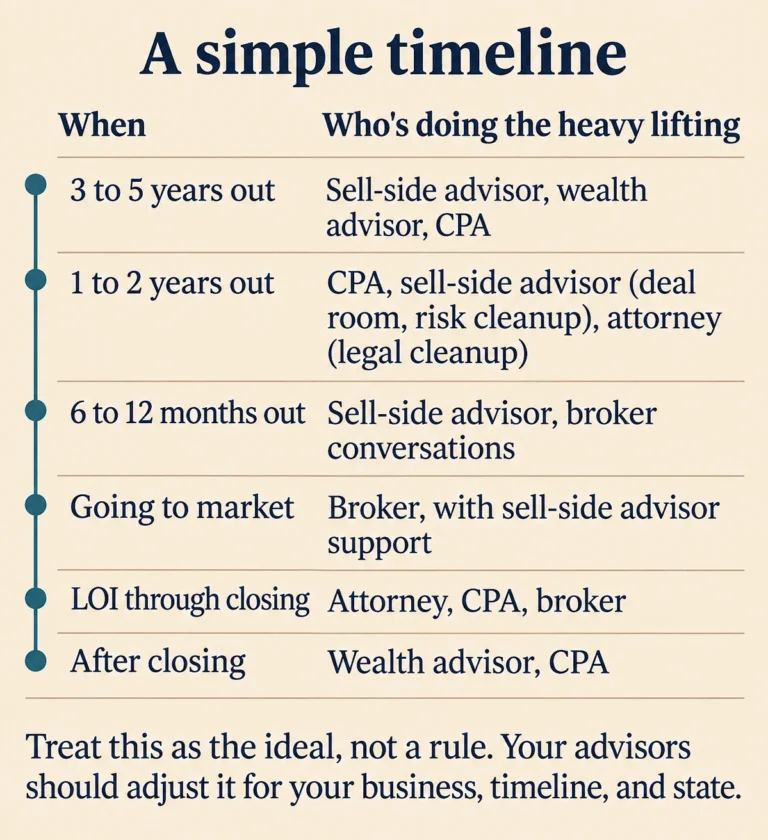
Treat this as the ideal, not a rule. Your advisors should adjust it for your business, timeline, and state.
That last one isn’t rude. It’s due diligence on the people doing your due diligence.
You don’t need to build the whole team this week. Pick one.
If you’re thinking, “I’m not ready for a deal team yet,” that’s the right time to start. Getting ready costs a lot less than getting caught off guard.
Before you hire anyone, it helps to know where your business stands: your timeline, your financial readiness, how much depends on you, and which risks a buyer will notice first.
Download Before You Burn Out: The Seasoned Owner’s Pre-Retirement Checklist. It’s free, takes about five minutes and gives you a private look at what to tackle first.
It isn’t a test, and it doesn’t mean you’re ready to list. It’s a practical first step.

Heather Williams is a small business buyer and founder of HCW Biz Advisors. Alongside her husband Chris, she evaluates and pursues small business acquisitions while helping owners of established, service-based businesses prepare for a future sale with more clarity, confidence, and options.
